


The Best Tiles for a Patio: A Complete Guide
Estimated reading time: 8 minutes
Choosing patio tiles is genuinely hard. Get it wrong and you're looking at something slippery, porous or completely out of keeping with your home. Get it right and you've got an outdoor space you'll love for years. Our outdoor tiles collection brings together materials chosen for beauty and durability. This guide gives you the practical knowledge to choose well.
- What Specific Features Should You Look For in Patio Tiles?
- How Do Porcelain Patio Tiles Compare With Natural Stone?
- Which Outdoor Tiles Are Best for Particular Types of Patio?
- What Alternatives to Standard Garden Patio Tiles Are Worth Considering?
- How Do You Spot a Quality Outdoor Tile? Green Flags and Red Flags
What Specific Features Should You Look For in Patio Tiles?
Not every tile is built for outdoor life. Fall for a colour before you've checked the basics and you'll regret it.
Slip resistance
Outdoor tiles need to be suitable for external use, especially in areas exposed to rain, moisture or changing weather conditions. For patios, paths, garden terraces, pool surrounds, driveways or sloped areas, always check that the tile offers appropriate slip resistance for its intended setting. This is not just a design consideration. It plays an important role in creating a safer outdoor surface.
Frost resistance
UK winters put tiles through real stress. Porcelain fired at high temperatures absorbs very little water (0.5% or less), so it handles freeze-thaw cycles well. Natural stone varies. Granite and slate have low porosity and cope well in most UK conditions. Limestone and sandstone are more porous. For outdoor use, confirm they carry a frost resistance rating. Sealing helps protect against staining, surface moisture and algae, but it doesn't make a stone frost resistant. That comes down to the stone itself.
Thickness
Outdoor tiles are typically 20mm thick. That extra depth distributes weight across the substrate and resists cracking under foot traffic and ground movement. Standard indoor tiles, which range from around 9mm to 12mm, aren't built for this.
Water absorption
Porosity determines how a tile behaves outside. High-porosity tiles stain more readily and are vulnerable to frost. Check to make sure the tile is suitable for outdoors.
Finish
A textured or matt surface grips underfoot and ages well. Polished finishes look beautiful indoors but become slippery when wet. For a patio, a structured or calibrated stone finish is the right call.
Size and format
Larger formats (600×600mm or 900×600mm) create a sense of space and keep grout lines to a minimum. Smaller tiles suit period properties or cottage gardens where a handcrafted quality feels right.
- Is the tile suitable for outdoor use?
- Is it confirmed as frost resistant or rated for exterior use?
- Is it 20mm thick, or explicitly approved for outdoor laying?
- Does the finish work with the light levels on your patio?
- Does the format feel right for the scale of the space?
How Do Porcelain Patio Tiles Compare With Natural Stone?
It's one of the most common comparisons we hear. And the honest answer is: it depends on what you want from your garden.
Porcelain
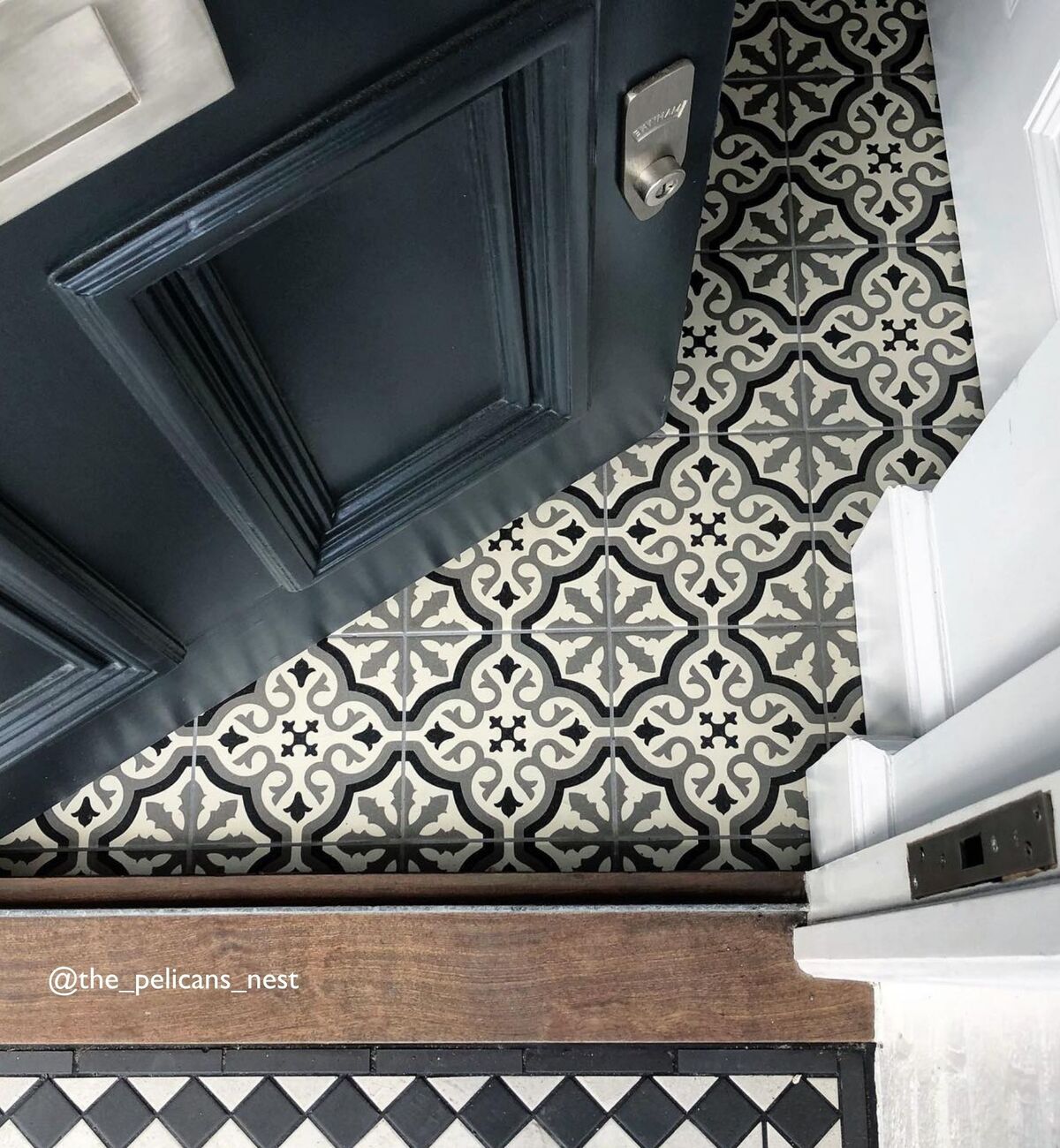
Porcelain is the practical choice for most UK patios. It's dense, non-porous, frost resistant and needs almost no maintenance. Colour and texture stay consistent across a batch, so ordering and laying is straightforward. Modern porcelain can replicate the warmth of limestone, the depth of slate or the grain of weathered concrete, without the upkeep. For busy family gardens, shaded terraces or anyone who doesn't want to spend time sealing and treating, it's the dependable option.
Natural Stone
Natural stone brings something else. Slate, granite, sandstone, limestone: each piece is genuinely unique. The variation in colour, veining and texture is something no manufactured tile can fully replicate. But there's a trade-off. Most natural stone benefits from sealing before laying and periodically thereafter. Softer, more porous stones such as sandstone and limestone need it more urgently. Granite and slate are denser and more resistant, but sealing is still widely recommended to guard against staining and algae in the UK climate.

So: porcelain for durability and ease. Natural stone for material authenticity and character. The right choice comes down to how much time you want to give your patio, and what matters to you.
”Which Outdoor Tiles Are Best for Particular Types of Patio?
How you use your patio shapes the tile you need. It's worth thinking about this before you start looking.
Family gardens and busy outdoor spaces
You need a tile that handles daily wear without looking tired. A 20mm porcelain in a warm stone or neutral tone with a textured surface holds up well to foot traffic and garden furniture. A surface with natural variation disguises marks and wear far better than a plain finish.
Entertaining terraces
Entertaining terraces suit something with visual warmth and a bit of scale. Larger format porcelain in taupe or stone tones creates an outdoor room that feels settled and inviting. A brushed or structured finish reads especially well in evening light.
North-facing or shaded patios
These are more prone to algae and moisture retention. Here, low water absorption and good slip resistance are essential. Porcelain's non-porous surface resists biological growth more effectively than natural stone in these conditions, making it the more practical choice for shadier spots.
Walls and steps
When these connect to a tiled patio, coordinated materials give the whole space a sense of intention. Our outdoor wall tiles are worth browsing alongside any outdoor floor selection.
Period and heritage properties
These often call for something more tactile. A natural slate, a riven stone or a textured porcelain that echoes the character of the building will sit more naturally than a large-format contemporary tile. Scale and finish count for as much as colour here.
What Alternatives to Standard Garden Patio Tiles Are Worth Considering?
Not every garden suits a conventional patio tile. Here are some directions worth exploring.
Wood-effect porcelain
Porcelain in a wood-effect finish gives you the warmth and linearity of timber decking. But unlike real wood, it won't warp, stain or need annual treatment. It performs outdoors in all weathers and suits gardens where the look of natural wood is part of the picture.
Slate
Slate brings rich, deep colouring: charcoal, blue-grey, heathered green. The naturally riven surface grips well underfoot, and outdoor-grade slate has low water absorption, making it well suited to the UK climate. Sealing is recommended to protect against staining and to slow the growth of algae, particularly in shadier spots.
Granite and textured limestone
For a more formal, architectural quality, granite and textured limestone are worth considering. Granite in particular is exceptionally hard-wearing, with a depth of colour that works in both contemporary and traditional settings. For a terrace where material quality really matters, stone is hard to argue with.
Large-format stone-effect porcelain
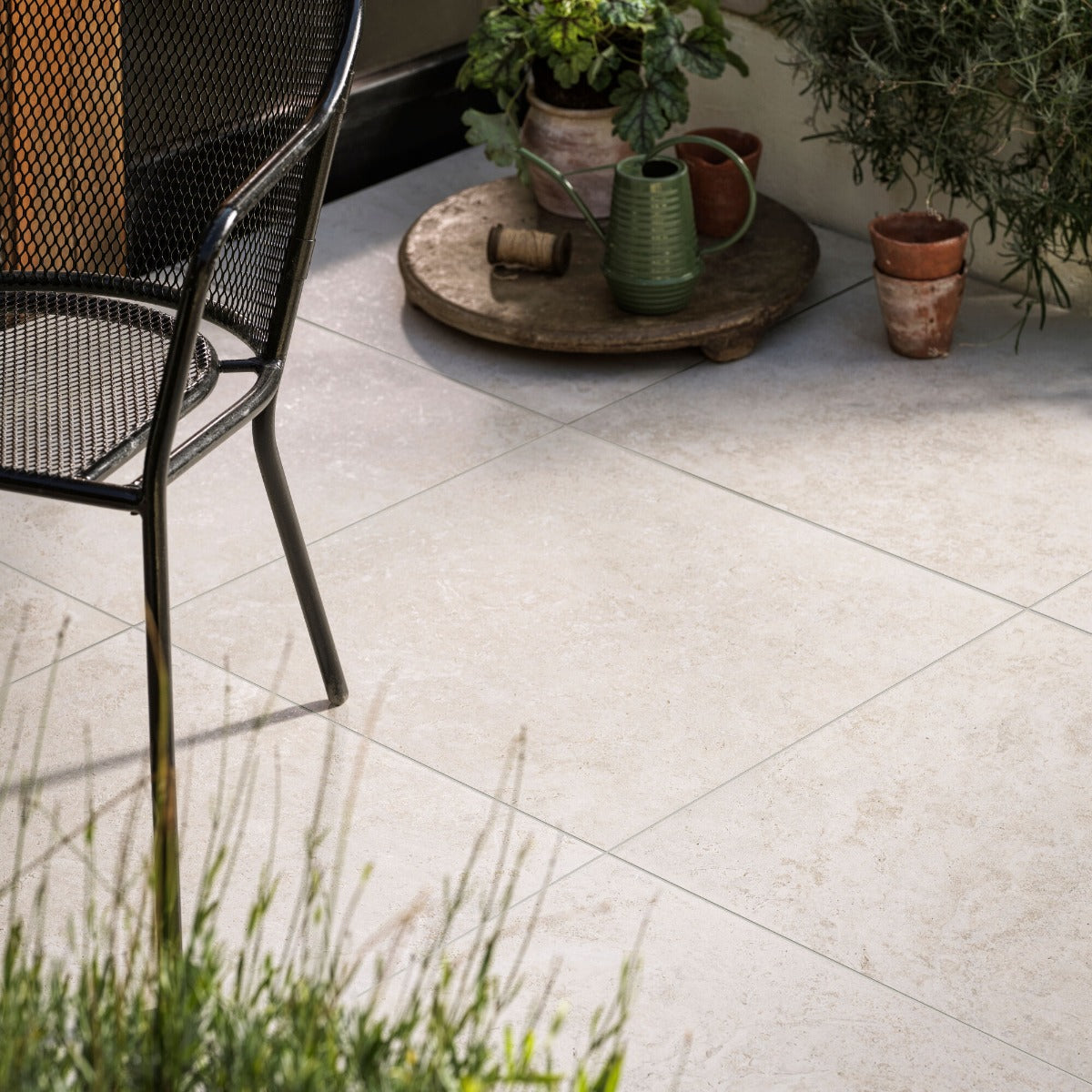
If you're drawn to a calm, continuous surface, large-format porcelain in a stone effect (limestone, travertine or concrete-look) suits modern garden design well. The tile becomes the backdrop rather than the focus, drawing the eye toward the planting instead. Browse our stone floor tiles and porcelain floor tiles alongside the outdoor range for a fuller picture.
Material Quality Matters
For a terrace where material quality really matters, stone is hard to argue with.
How Do You Spot a Quality Outdoor Tile? Green Flags and Red Flags
| Flag | What to Look For |
|---|---|
| ✅ Green Flag | Check tile suitability for outdoor use |
| ✅ Green Flag | 20mm thickness for outdoor laying on a prepared substrate |
| ✅ Green Flag | Consistent calibration across the batch: important for a flat, even finish |
| ✅ Green Flag | A structured, textured or matt surface that performs in wet conditions |
| ✅ Green Flag | A clear technical data sheet covering absorption, slip rating and recommended use |
| ✅ Green Flag | A finish and colour tone sampled in your actual outdoor light |
| 🚩 Red Flag | No outdoor suitability confirmation: indoor tiles on a patio crack and fail |
| 🚩 Red Flag | A polished or gloss finish: slippery when wet and unforgiving outdoors |
| 🚩 Red Flag | No declared slip resistance rating |
| 🚩 Red Flag | Indoor thickness (typically 9mm to 12mm) sold as suitable for outdoor use |
| 🚩 Red Flag | High-porosity stone with no frost resistance rating and no sealing plan |
| 🚩 Red Flag | Ordering without sampling first: outdoor light changes colour considerably |
| 🚩 Red Flag | No batch calibration check: unintentional variation is hard to live with |
The right patio tile takes some thought. But it's worth it. We've spent more than four decades sourcing materials chosen for quality, authenticity and longevity, and we know how much the right choice can change a space. If you'd like guidance before you decide, get in touch.