



How Do You Mix Bathroom Wall and Floor Tiles in the Same Space?
Mixing bathroom wall and floor tiles well is one of the most rewarding things you can do for a bathroom scheme. A layered tile scheme gives a bathroom genuine character: surfaces that feel considered rather than matched by default. Browse our bathroom tiles collection to find combinations worth building a room around.
Estimated reading time: 7 minutes
Key takeaways
What Is the Visual Relationship Between Wall and Floor Tiles, and Why Does It Matter?
Understanding the visual relationship between wall and floor tiles is the foundation of a good bathroom scheme. Before you think about individual products, look at the room as a whole.
Tiles cover most of what you can see in a bathroom. The way they speak to each other determines whether the space feels calm and resolved, or restless.
Wall and floor tiles carry different visual weights. Floor tiles anchor a room. You read them from a distance, and they need to hold up to water and daily use. Wall tiles are closer: at eye level, at arm's reach. They can carry more detail, pattern or texture. A scheme that plays to the strengths of each surface will always feel more considered than one that treats both as interchangeable.
Are Matching Tiles the Best Approach, or Is Tonal Harmony More Effective?
Tonal harmony, not matching, is what makes a mixed tile scheme feel resolved. The instinct to match is understandable. But a perfectly matched scheme can flatten a room and strip away the depth that makes a bathroom feel designed rather than decorated.
Look instead for tiles that share an underlying palette: a similar warmth or coolness, a comparable depth of colour. A warm grey limestone floor reads beautifully with a pale, crackle glazed wall tile that carries the same warmth in its surface. Neither is a copy of the other, but they belong together.
Contrast can work just as well, if it's deliberate. A richly veined floor tile paired with a calm matt wall tile lets the floor speak clearly without competing with the walls. The key is intention: every combination should feel chosen.


How Does Varying Tile Size Between Floor and Wall Create Depth and Proportion?
Varying tile size between floor and walls creates depth and proportion without visual competition. Use a different format on the floor from the wall and you give each surface its own identity. The eye stops reading the room as a single, unbroken plane.
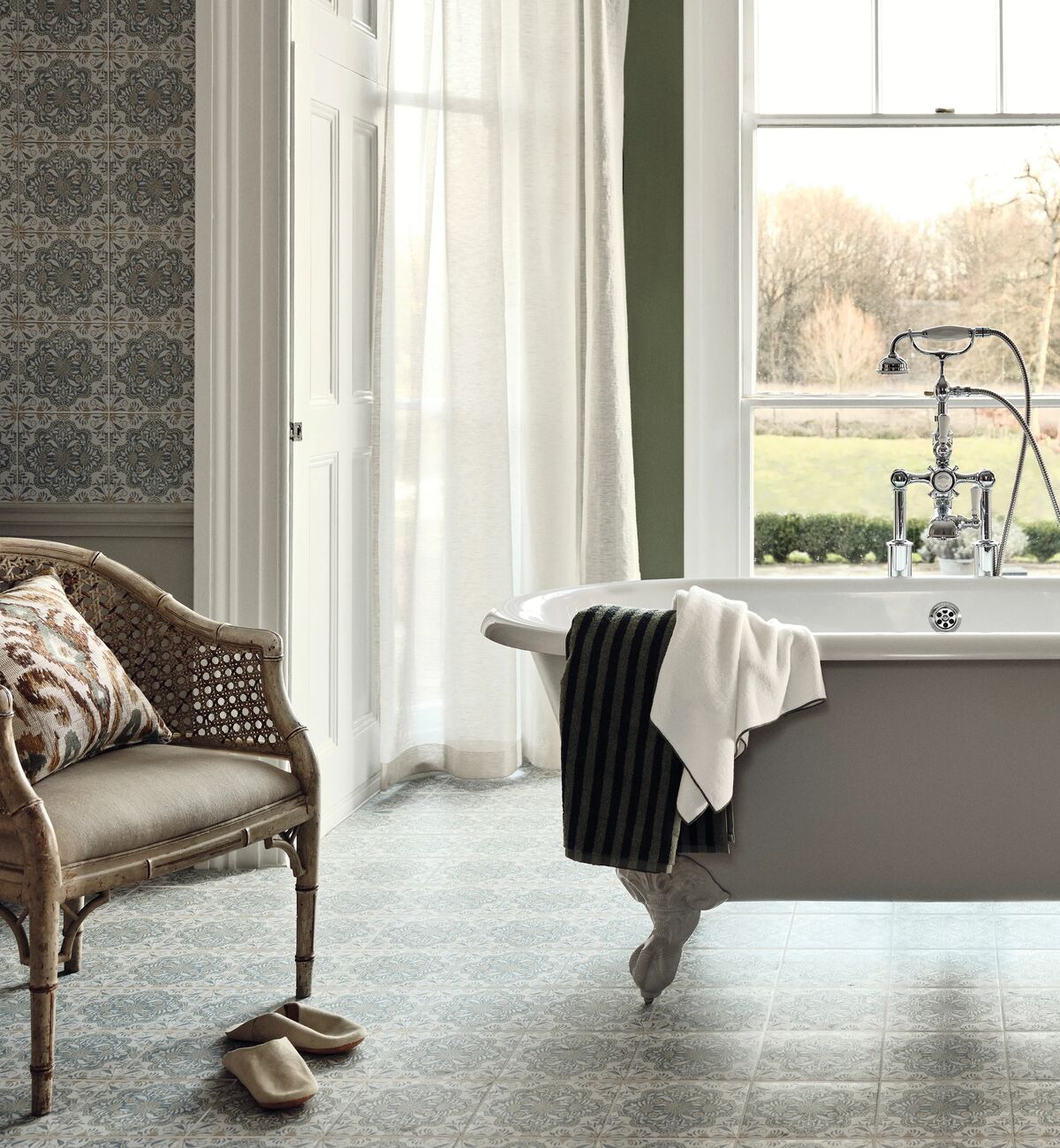
Larger format tiles on the floor reduce the number of grout lines underfoot and make a space feel more open. This is particularly useful in smaller bathrooms. Smaller, more textured tiles on the walls bring warmth and detail at eye level: think a hand glazed brick format or a traditional encaustic.
The reverse can work too. A large format wall tile behind a freestanding bath, paired with a smaller mosaic or traditional floor tile, creates a clear focal point worth designing the room around.
Using the same tile in the same size on both surfaces tends to work best in larger rooms, where it reads as architectural rather than repetitive.
What Role Do Finish and Texture Play When Combining Bathroom Tiles?
Finish and texture matter as much as colour. Two tiles in an almost identical shade can feel entirely different in a room, depending on whether one has a chalky matt surface and the other carries a soft gloss or a natural stone texture. That difference in how each surface absorbs light is one of the most useful tools you have.
In showers, wet rooms and floor areas around baths, a matt or textured finish offers better slip resistance and tends to age more naturally. Gloss or satin finishes on walls reflect light well. That's useful in rooms with little natural daylight.
Mixing a textured or natural material on the floor with a smoother finish on the wall is a pairing that tends to feel right. It's practical where it needs to be, and refined where it can afford to be.
Is Grout Colour a Design Decision, and How Does a Consistent Choice Unify a Room?
Grout colour is a design decision, and a consistent choice across both surfaces unifies a room more than most people expect. Grout lines are visible across every tiled surface in a bathroom, and the colour you choose will either sit quietly in the scheme or become a defining element within it.
In most mixed tile schemes, using the same grout colour on both floor and walls, or two colours within the same tonal family, brings continuity to the room. A warm putty or linen tone softens the edges between tiles on both surfaces and reads as part of the natural palette rather than something imposed upon it.
Where tiles are contrasting or patterned, a neutral grout gives the scheme room to breathe. Where tiles are calm and tonal, a slightly deeper grout adds definition and structure.
How Are Tile Layout Directions Used to Shape the Way a Space Reads?
Layout direction shapes how a space reads, and it's worth thinking about before you commit. Running floor tiles on the diagonal can widen a narrow room visually. In a bathroom with a generous ceiling height, a horizontal brick bond pattern on the wall can bring a sense of warmth and intimacy. Vertical stacking draws the eye upward and gives a modest bathroom more presence.
These aren't rules. They're tools. And they work best when you consider the floor and wall layouts together rather than separately.
A diagonally laid floor tile reads best against a wall tile in a clean upright stack or a simple horizontal course. Two highly directional layouts on adjacent surfaces compete for attention, leaving a room feeling unsettled.
Think about where the eye will naturally rest in the finished room. Let the layouts support that.

When Is a Third Tile Element Worth Adding, and When Should You Hold Back?
Knowing when to add a third tile element, and when to hold back, is what separates a considered scheme from a crowded one. A feature wall, a bordered floor, a decorative insert above a bath or behind a basin: all of these can add genuine character. But only when there's enough calm space around them for the detail to land.
A third tile works best as punctuation. A moment of interest, surrounded by quieter materials that frame it. If the floor and walls are already carrying texture, depth and tonal contrast, the room probably doesn't need another voice.
Trust what you already have before you add more.
Ready to Start Your Bathroom Tile Scheme?
Mixing bathroom tiles well comes down to confidence in the materials and clarity of intent. If you'd like a hand building a scheme that works for your space, we'd love to help. Get in touch and we'll work through it with you.
Disclaimer: This guide offers general design advice on mixing bathroom wall tiles, floor tiles and everything in between. Every room is different, and what works in one space won't necessarily work in another. Room dimensions, existing fixtures, natural light and personal taste all play a part. We'd always recommend ordering samples before you decide: colours, textures and finishes look quite different on screen than they do at home.