



How Do You Use Mixed Tile Sizes in a Single Bathroom Layout?
Mixing tile sizes in a single bathroom is a well-practised approach in thoughtful interior design, and it can bring real depth and character to a room. The key is understanding how different formats relate to one another and to the proportions of the space. Browse our full range of bathroom tiles to explore the formats, finishes and palettes that work well in mixed layouts.
Estimated reading time: 6 minutes
Key takeaways:
Why Is Mixing Tile Sizes in a Bathroom Such an Effective Design Approach?
Mixing tile sizes is an effective way to bring considered design into a bathroom because it introduces visual rhythm without relying on pattern or colour contrast alone. A single tile format, however beautiful, can feel flat across every surface. Introducing a second size breaks that flatness and draws the eye through the space. That second format might sit on the floor, a feature wall or around the bath.
We respond to scale contrast. Pairing a large format bathroom floor tile with a smaller wall tile mirrors the way natural stone and crafted interiors have traditionally been built: generous planes of material set against finer detail. It feels deliberate rather than accidental.
This approach also lets you define distinct zones within the bathroom: bath area, shower enclosure, vanity. You can do it without partitions or dramatic colour shifts. Different tile formats carry their own visual weight, and using that weight well is what separates a considered bathroom from a serviceable one.
Which Tile Size Combinations Work Best for Bathroom Floors and Walls?
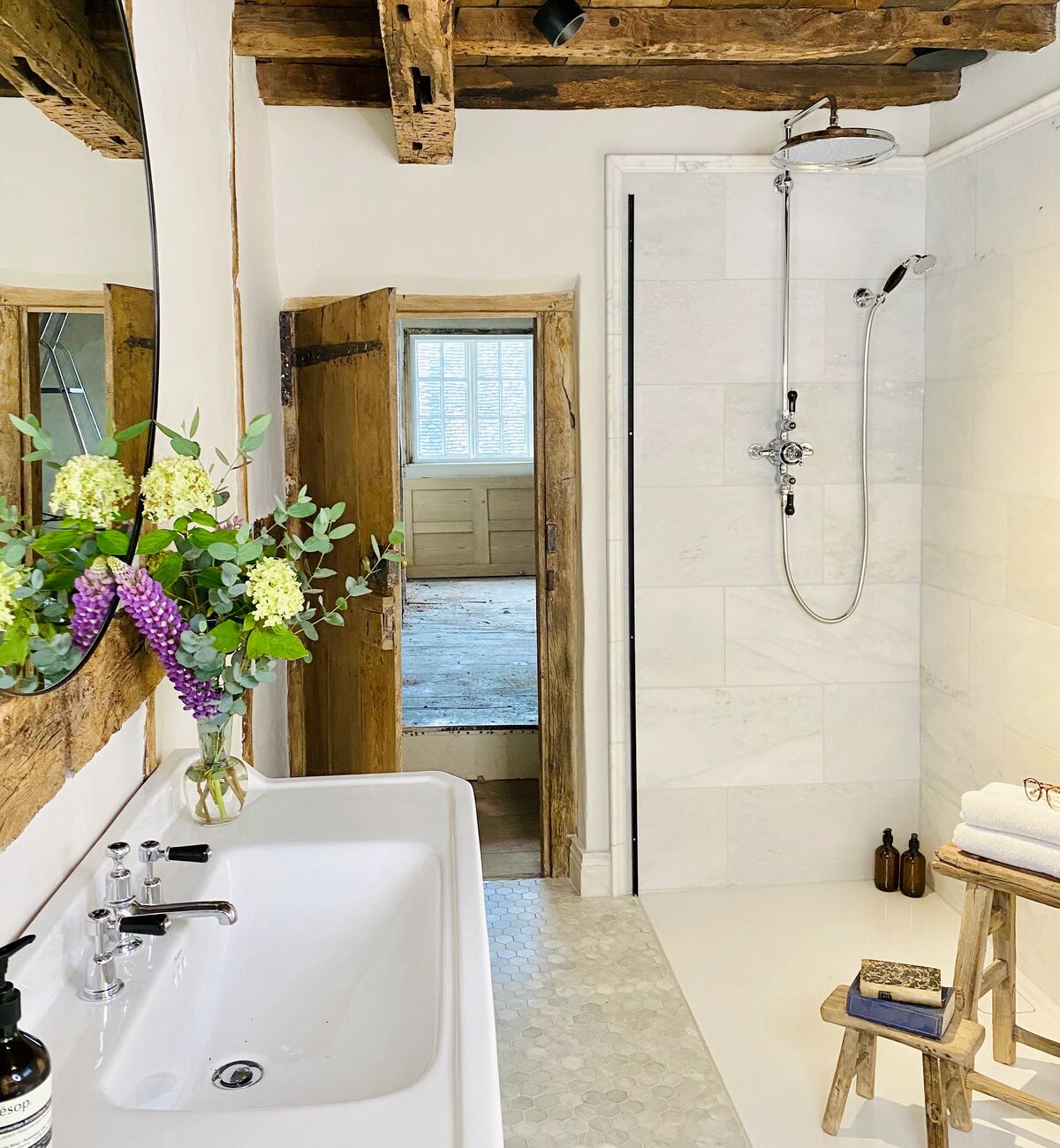
The most enduring combinations are those where the two formats belong to the same material family or palette, because the visual connection between them unifies the scheme. A large format stone effect tile on the floor sits well alongside a smaller subway or square format in the same or complementary tone on the walls. The sizes differ, but the materials feel connected.
For bathroom floor tiles, formats of 60x60cm, 60x120cm or larger bring calm and openness to a room. They work well where the space is generous enough for wide, unfussy planes of tile. On the walls, smaller formats add texture and detail without competing: metro tiles at 7.5x15cm or 10x20cm and mosaic panels all sit well here.
You can also reverse the approach: larger wall tiles paired with smaller floor formats. This suits compact bathrooms, where a generous wall tile adds height and the smaller floor tile brings detail underfoot. In either case, the format on the dominant surface should feel proportional to the room. Oversized tiles in a narrow bathroom can feel at odds with the space, and tiles that are too small in a generous room may look busy.
How Do You Create Visual Flow Between Different Tile Sizes?
Visual flow between different tile sizes is easier to achieve than you might think. Anchor the scheme in a consistent material, tone or finish, and the eye moves between formats without interruption. When tiles share an undertone, the transition feels easy. Think warm cream, cool grey, quiet stone. When formats contrast sharply in both size and colour, it can feel disjointed.
Grout plays a significant role here. A grout that matches the tile colour reduces the visible joint and lets the material read as one continuous plane: particularly effective with large format floor tiles where you're after a calm, expansive feel. A contrasting grout defines each tile and can bring out a geometric pattern or the character of a handmade tile. Neither approach is wrong. But each produces a different result.
The direction tiles are laid also affects flow. Running the same orientation on both surfaces: a brick bond on floor and wall, for instance, creates a quiet coherence. Introducing a different laying pattern on one surface can add interest, but it works best when the shift feels intentional. Think about where the two formats meet. A neat transition at the base of the wall or the edge of the shower is a detail worth getting right.

Does Mixing Tile Sizes Work in a Small Bathroom?
Mixing tile sizes is well suited to smaller bathrooms, as long as the formats you choose are scaled to the room. A common concern is that mixing formats will make a small bathroom feel busy or fragmented. But the opposite is true when you approach it with restraint.
In a compact bathroom, a medium format tile on the floor (45x45cm or a brick format works well) alongside a smaller wall tile creates contrast without overwhelming the space. Keep the palette close: perhaps the same stone tone across both surfaces with a variation in size and texture. The result feels layered rather than cluttered.
Where ceiling height allows, extending the wall tile higher draws the eye upward and makes the room feel taller: particularly true when the wall format runs vertically. Pair this with a calm floor tile in a slightly deeper tone and it grounds the room without closing it in.
How Do You Plan a Mixed Tile Layout Before You Begin?
Planning before work begins is the most important thing you can do in a mixed tile bathroom project, because changes on paper cost nothing. Changes made on site cost both time and material.
Start by sketching the room to scale. Map out where each tile format will sit: floor, shower walls, main walls, bath surround. That way you can assess the proportions visually before a single tile is cut.
Think about how the tiles will meet at transitions: at the floor to wall junction, at internal and external corners and at the edge of any feature area. These junctions are where a mixed size scheme either holds together or begins to feel unresolved. Plan them in advance and your tiler can approach the job with clear direction.
Order a sample of each tile before you buy in full. Seeing the two formats together in your own bathroom, in your light and against your fixtures, is the most reliable way to judge how they'll work as a pair. Tile colours and textures can shift between a screen image and the real material. And the relationship between two formats often only becomes clear once you place them side by side.
The right combination of bathroom wall tiles and bathroom floor tiles can transform a functional room into one that feels well made and built to be lived with. If you'd like guidance on choosing formats, finishes and palettes that work in your space, we're here to help. Get in touch and we'll help you find the tiles that are right for your home.
Disclaimer: This guide is here to help you plan your bathroom tiling project with confidence. We've done our best to ensure accuracy, but rooms vary in proportion, structure and condition, and results will depend on your specific space, substrate and installation method. We always recommend consulting a qualified tiler or installation professional before starting any tiling work, particularly where structural or waterproofing considerations are involved. Product availability and specifications can change, so please check the current listings at firedearth.com for the most up-to-date information.