



How Do You Get the Gradient, Pattern and Grout Right on Shower Floor Tiles?
This guide offers general design and practical guidance only. Building regulations, drainage requirements and installation methods vary by property, so always check current standards and speak to a qualified tiler or waterproofing specialist before you start any shower floor project.
Direct answer
A shower floor is a small space that works hard. It needs a gradient that carries water to the drain, a tile format that follows that slope without cracking or pooling, and a grout that copes with daily moisture. Get those three things right and the rest, pattern, colour, character, becomes the part you'll actually enjoy. Take a look at our wet room floor tiles to see the formats we'd recommend for this job.
- A shower floor needs to fall towards the drain, typically between 1:80 and 1:35, so water never sits where it shouldn't. Your tiler will confirm the exact fall for your installation.
- Small tiles and mosaics follow that fall with far more ease than large ones.
- Pattern isn't just decoration here. Hexagons, penny rounds and herringbone all earn their place through grip and drainage too.
- Grout choice matters in a wet space, and there's a genuine trade off between practicality and finish.
- Large tiles still belong in a shower. Just not usually underfoot.
Why does a shower floor need a gradient?
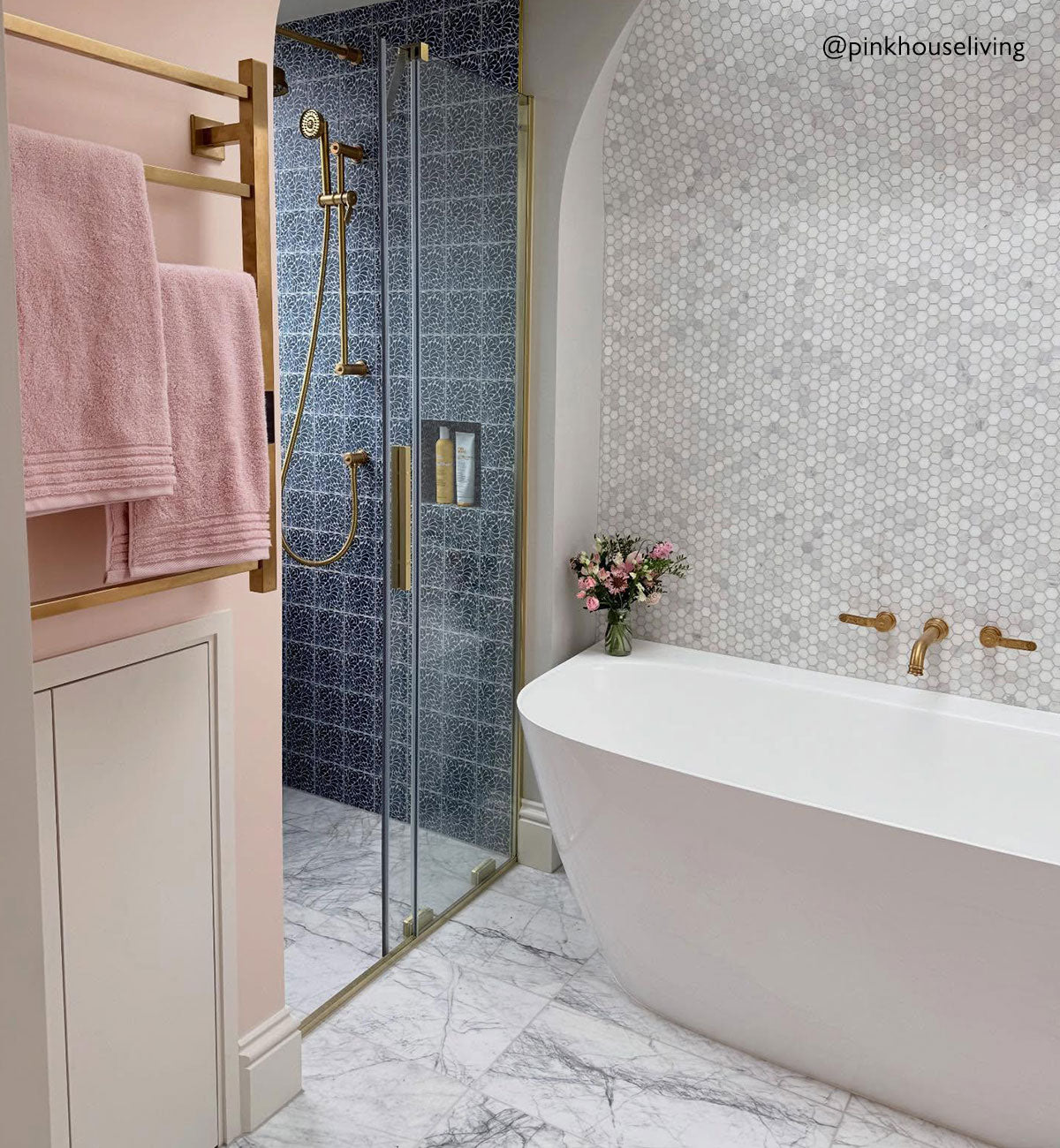
A shower floor is never flat. It's built with a gentle fall, typically between 1:80 and 1:35, so water runs to the drain rather than lingering on the surface. At the shallower end of that range, 1:80 works out at roughly 12.5mm of drop per metre. Too flat and water sits. Too steep and the floor feels uneven underfoot, which is the last thing you want first thing in the morning. Ask your tiler to confirm the exact fall for your space, since it depends on the drain type and the size of the floor.
That fall sits on top of a fully waterproofed base, not the tiles themselves. Tiles and grout are water resistant, but they're not what keeps moisture out of your subfloor. That job belongs to the membrane underneath, which is exactly why we'd point you towards a qualified installer for this part of the project. Get the gradient wrong and no amount of beautiful tile will put it right later.
Get the gradient wrong and no amount of beautiful tile will put it right later.
”What size tile works best for a shower floor?
Small format tiles and mosaics are usually the better choice here, and there's a genuinely practical reason for that, not just a design one. Mosaics sit on flexible mesh sheets, so they move with the curve of a sloped, tanked floor. A large rigid tile can't bend to match that fall. It either needs awkward cuts or it bridges the slope altogether, leaving water pooling beneath it.
Many tilers steer clear of large format tiles on a graded floor for exactly this reason. Smaller tiles also bring more grout lines per square metre, and those lines do more than hold everything in place. Each one adds a little texture underfoot, and that texture is what gives you grip when the floor's wet.
Which pattern suits a shower floor?
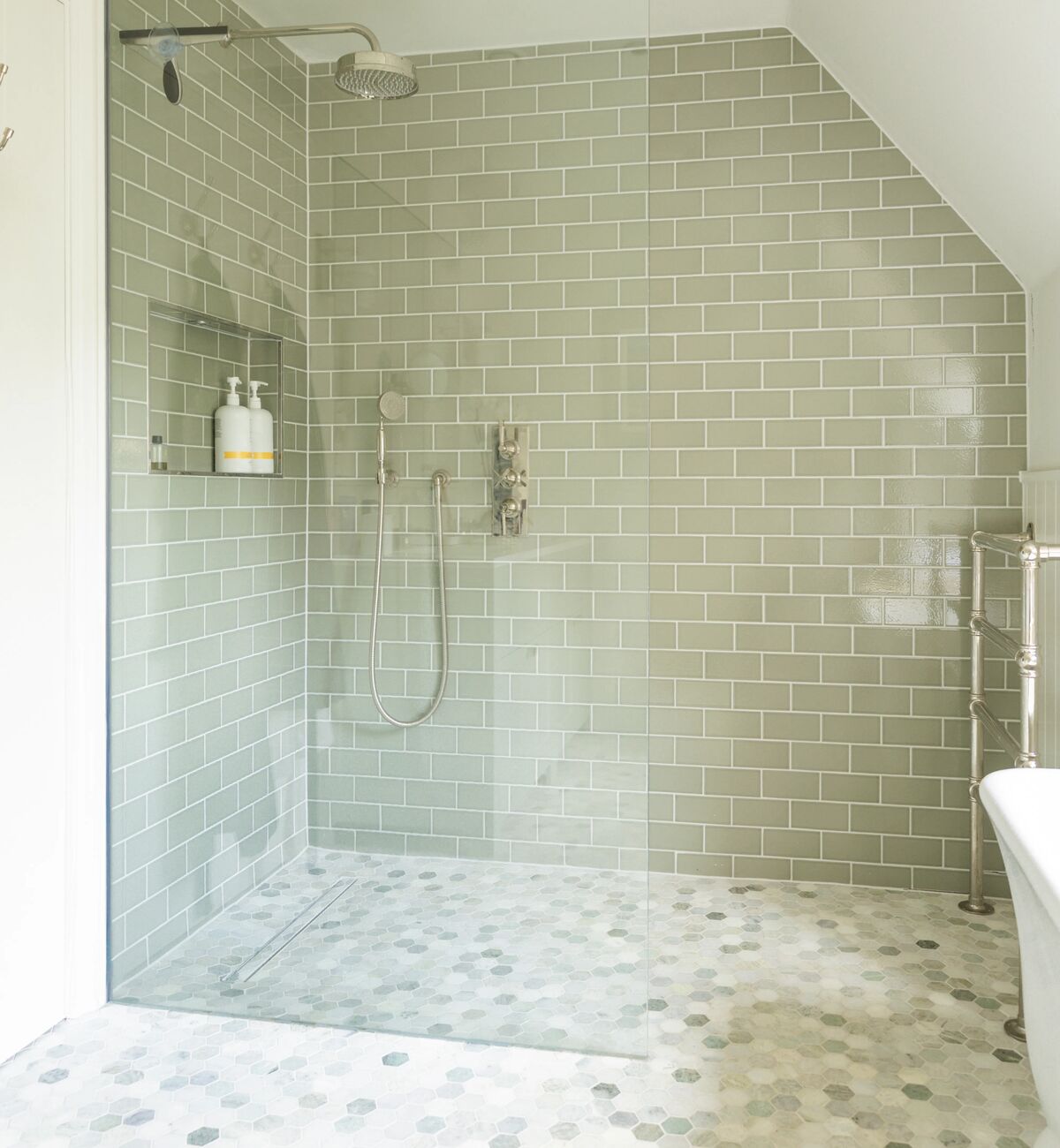
Pattern on a shower floor earns its place through grip and drainage, not looks alone. A dense layout of small tiles, whether that's a hexagon, a penny round or a scallop shape, gives you more joints per square metre and more traction exactly where you need it.
A few options worth considering:
Hexagon mosaics are a classic for good reason. They wrap neatly around a slope and suit almost any bathroom style.
Penny round tiles bring a softer, more rounded look, with plenty of grip built into the grout lines.
Basketweave and brick bond layouts add structure, so the floor feels considered rather than plain.
Herringbone brings movement and direction to a small floor area.
Our hexagonal floor tiles and herringbone tiles collections are a good place to start if you're weighing up shower tiles ideas for your own space.


What's the right grout for a shower floor?
Grout choice comes down to a genuine trade off between the ideal and the practical. Epoxy grout is fully waterproof and never needs sealing, so it's often held up as the best option for a wet floor. It's also trickier to apply and costs more, which is worth knowing before you commit to it.
Cementitious grout, the kind most tilers reach for day to day, works well on a shower floor as long as the floor underneath is properly tanked. We stock Mapei's Ultracolour Plus grout in a wide range of colours, so you can match your grout to the tile for a seamless look or use it to bring in a little contrast instead. A mid tone grout wears more gracefully than stark white, particularly on a floor that sees daily use.
A mid tone grout wears more gracefully than stark white, particularly on a floor that sees daily use.
”Can you use large shower tiles at all?
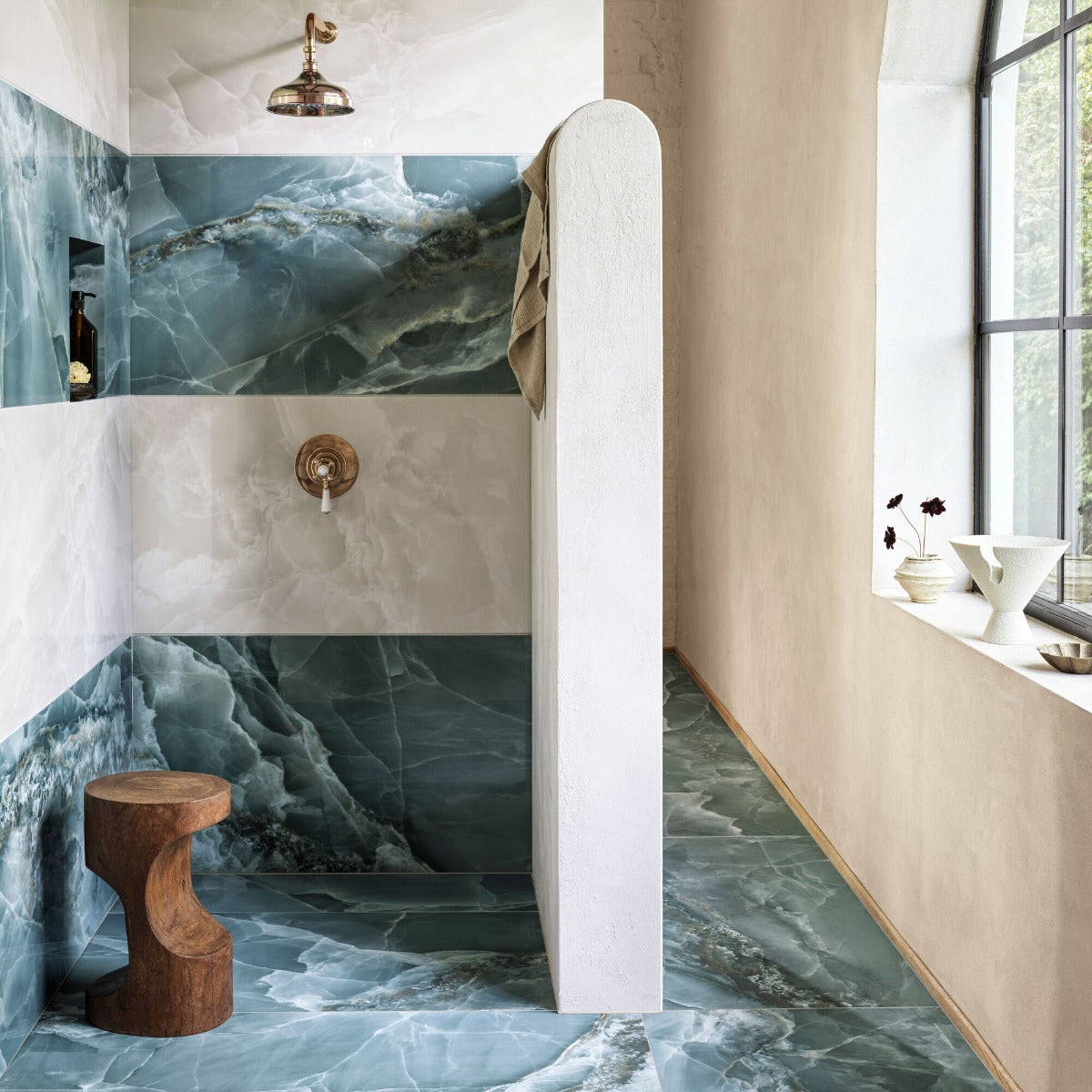
Large tiles still belong in a shower. Just not usually on the floor. Pair a large format tile on the walls with a small mosaic underfoot and you get a clean, considered wall alongside a floor built to cope with the slope. It's a combination worth keeping in mind as you plan your shower tile design, and it gives you room to bring in colour or texture on the walls without asking the floor to compromise on practicality.
If you're still deciding what suits your bathroom, think about how the two surfaces will read together. A patterned floor with a plain wall tile often feels calmer than pattern on both.
Ready to plan your shower floor?
Explore our beautiful collection of wet room floor tiles. Find the perfect design to match your current bathroom layout, size, and colour scheme.