



How Do You Lay Bathroom Tiles to Make a Small Bathroom Feel Larger?
This guide gives general advice on choosing and laying bathroom tiles. It isn't a substitute for professional fitting, so check manufacturer instructions, current building regulations and the advice of a qualified tiler before you start any work.
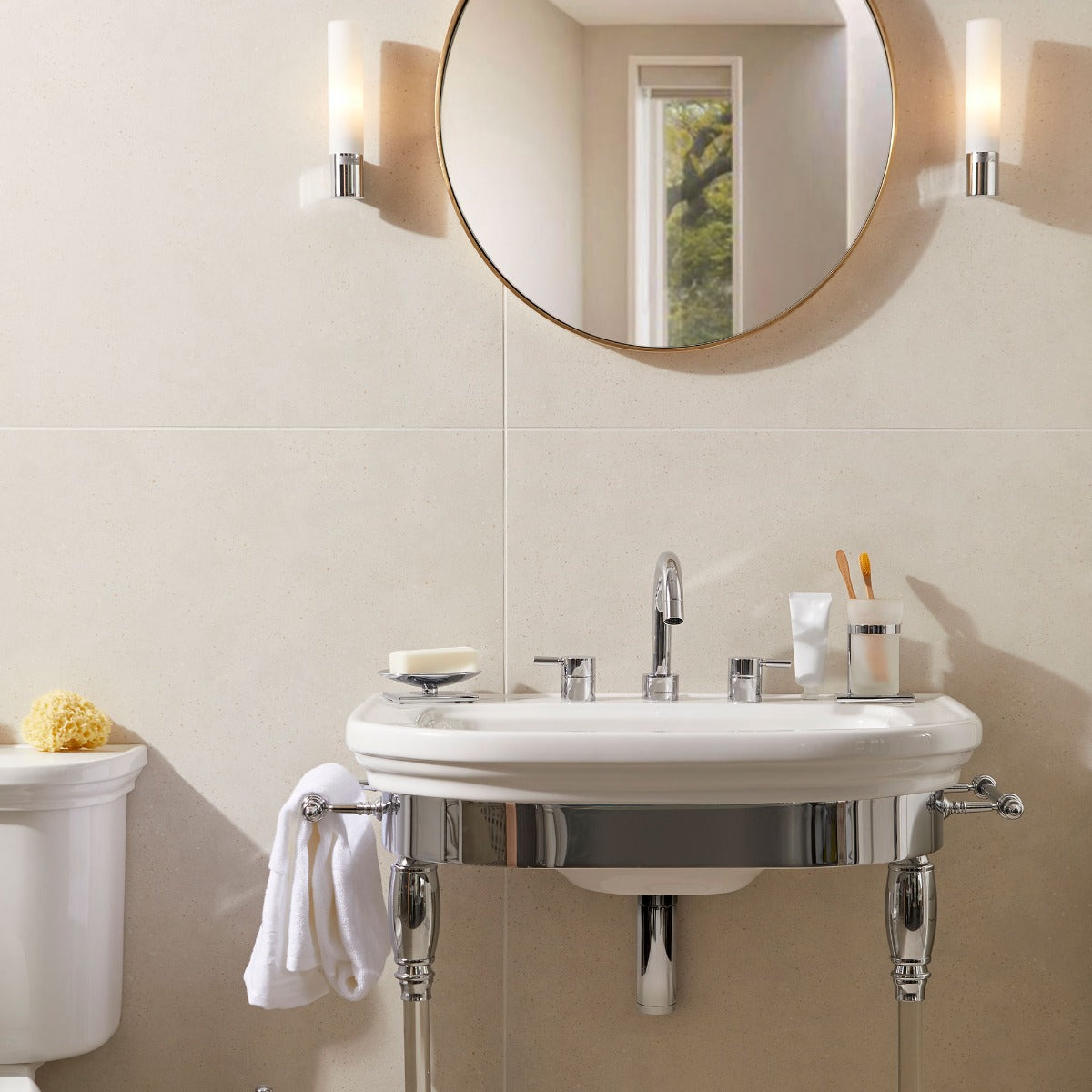
Large tiles are the single best way to make a small bathroom feel bigger, because fewer grout lines let your eye read the room as one open surface instead of a patchwork of small pieces. Pale, matt tiles add to that effect by reflecting light and letting colour flow from floor to wall. Have a look through our bathroom tiles to find a size, finish and colour that suits your space.
- Large bathroom tiles are better for a small room in almost every case, because fewer joints mean fewer visual breaks.
- Floor tiles and wall tiles are best kept close in tone, even if they aren't identical.
- Layout is just as important as tile size when it comes to making a small bathroom feel bigger.
- Preparation is the part people rush, but it's what determines whether the finished room looks larger or smaller than it should.
- Grout colour and width are small details with a big effect on how spacious a bathroom feels.
- Shower floors are usually the one place where smaller tiles work better.
- Are Large Bathroom Tiles Better for a Small Bathroom?
- Should Bathroom Floor Tiles Match Bathroom Wall Tiles?
- What Bathroom Tile Design Ideas Make a Small Room Feel Bigger?
- What's the Best Way to Lay Tiles for a Bathroom?
- What Grout Works Best for Large Bathroom Tiles?
- Do Shower Floors Need Different Bathroom Tiles?
Are Large Bathroom Tiles Better for a Small Bathroom?

Large bathroom tiles are better for a small room in almost every case, because they need fewer grout lines to cover the same space. Every grout line is a small stop for your eye. Cut the number of stops and the room reads as one surface rather than a grid of tiny squares.
We'd generally call anything from 60x60cm and up a large tile. Go bigger again, from around 80x80cm, and you're into extra large territory, which suits a bigger bathroom more than a tight one. For most small bathrooms, something like our Axis Ivory Tile or Essence White Tile, both 60x120cm, gets the balance right: big enough to open the room up, small enough to fit around a bath or basin without endless cutting.
Cut the number of stops and the room reads as one surface rather than a grid of tiny squares.
”What about metro tiles or mosaics? They still have a place, on a feature wall or on a shower floor, but keep them as an accent rather than the main event in a small room.
Should Bathroom Floor Tiles Match Bathroom Wall Tiles?
Floor tiles and wall tiles are best kept close in tone, even if they aren't identical. When the colour shifts sharply at skirting height, your eye catches the join and the room suddenly has a visible edge again.
Try to stay within the same colour family: an ivory floor with an off white wall, or a pale grey wall with a soft grey veined floor. Some homeowners go a step further and use one tile for both, which removes the join altogether and lets the surface flow right around the room. Our Portland Ivory Cliff Tile is suited to both floor and wall for exactly this reason. But check any tile is rated for floor use before you lay it underfoot, because plenty of wall tiles simply aren't strong or grippy enough to cope.
What Bathroom Tile Design Ideas Make a Small Room Feel Bigger?
Layout is just as important as tile size when it comes to making a small bathroom feel bigger. Where do you want the eye to travel: up, along or across?
A straight lay, tile stacked directly above tile, keeps things calm and works almost anywhere. Turn a rectangular tile so it runs vertically up the wall and you'll pull the eye upward, which helps if your ceiling feels low. Lay the same tile horizontally and the room reads wider instead.
Herringbone and diagonal layouts add movement and can make a floor feel bigger, but they use more tile. Budget an extra 15 to 20% for cutting and waste on a herringbone floor, against around 10% for a simple straight lay. It's a trade off: more character, more offcuts.
One more thing worth knowing: don't lay large tiles with a classic half brick offset, because the stagger can cause lippage, where one edge sits slightly proud of the next. Use a smaller offset instead, around a third of the tile's length, or stick to a straight stack, and the surface stays flatter and safer underfoot.
It's a trade off: more character, more offcuts.
”What's the Best Way to Lay Tiles for a Bathroom?
Preparation is the part people rush, but it's what determines whether the finished room looks larger or smaller than it should.
Start with a proper measure of the room, including any alcoves, so you know what you're working with. Dry lay a row or two on the floor before you mix any adhesive, just to see how the cuts fall at the edges. Nobody wants a thin sliver of tile squeezed in next to the bath.
Make sure the surface underneath is flat, clean and dry. Large tiles show up an uneven floor far more than small ones do, so sort out any dips or bumps before you start. Work from the centre of the room outward, or from a fixed point like a doorway, and check every few rows with a spirit level. Small errors add up quickly over a run of large tiles, so it pays to check as you go rather than at the end.
Nobody wants a thin sliver of tile squeezed in next to the bath.
”What Grout Works Best for Large Bathroom Tiles?
Grout colour and width are small details with a big effect on how spacious a bathroom feels. Match the grout closely to the tile and the joints all but disappear, so the surface reads as one continuous plane. Choose a contrasting grout and you'll draw attention to every line instead, which suits a patterned tile but works against you if the goal is space.
Width matters too. For large rectified tiles on a flat surface, manufacturers typically recommend a joint of 2 to 3mm. Non rectified or slightly uneven tiles need a wider joint, usually around 5mm, to allow for the variation in size. Ask your supplier which grout width suits your chosen tile before you commit to a spacing, because getting it wrong is hard to undo once the tiles are set.
Do Shower Floors Need Different Bathroom Tiles?
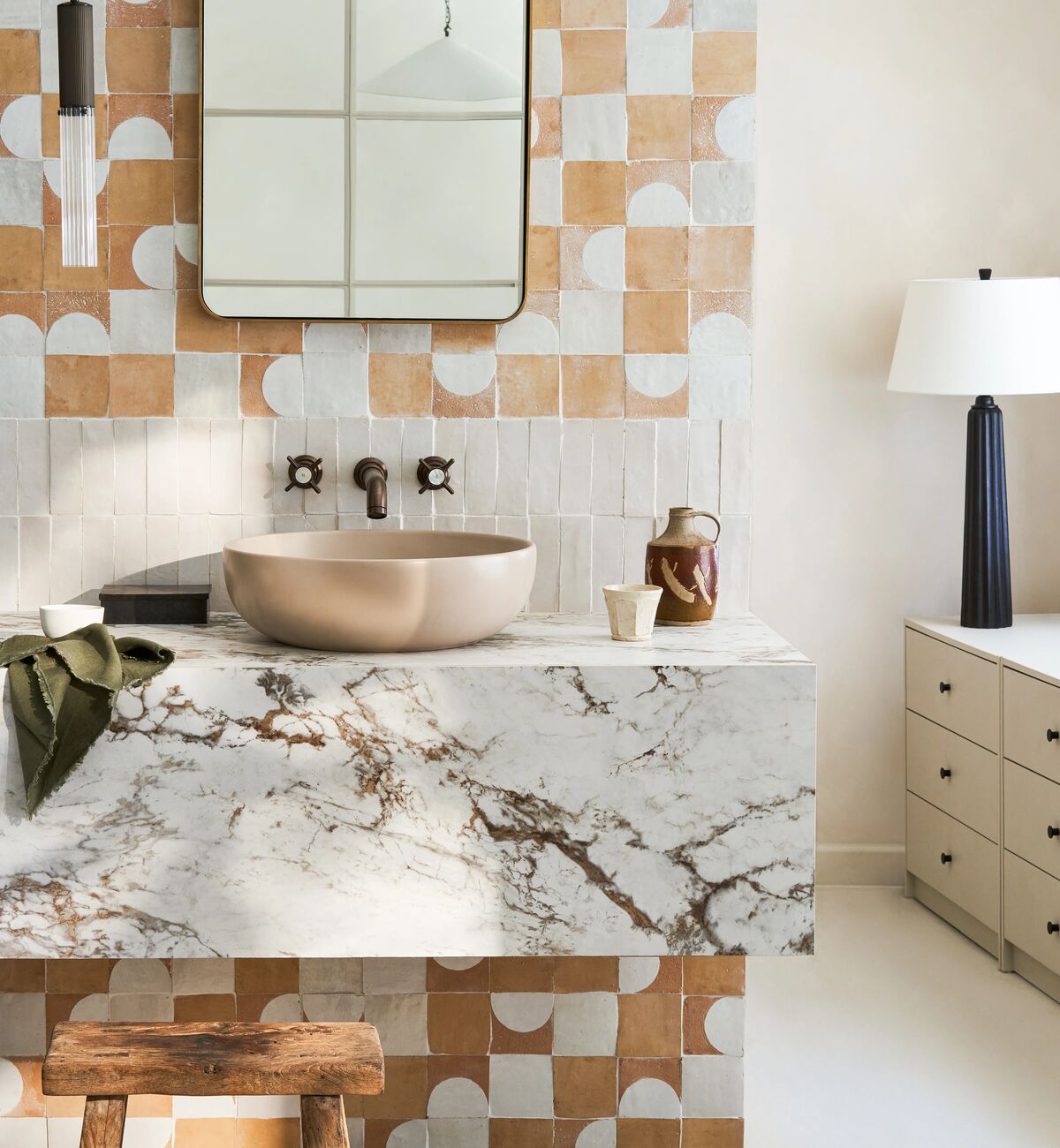
Shower floors are usually the one place where smaller tiles work better. A shower tray needs to fall gently toward the drain, and small tiles or mosaics follow that slope far more easily than one large slab. The extra grout lines also add grip underfoot, which matters once the floor is wet.
So don't feel you have to use the same large tile everywhere. Keep the large format for the main floor and walls, and drop to a small mosaic for the shower floor itself. The surrounding shower walls are a good spot for something with more character: our Medina Pure White Zellige works well as a small, light reflecting option here.


Ready to see how a tile actually looks in your bathroom's light?
Shop our luxury large format bathroom tiles to find the perfect design for your bathroom.