



Why the Way You Lay a Tile Matters as Much as the Tile Itself
Buying tiles is only half the job. The harder part, and the part most people underestimate, is what happens between the tile leaving its box and it settling into your floor for good. Get the laying right and a good tile looks considered for years. Get it wrong and even a beautiful tile from our wall and floor tile collection can feel unsettled underfoot. This guide walks you through what actually matters, so you end up with a floor you're glad you chose.
- What specific features should you check before laying floor tiles?
- How do different tiles compare when it comes to laying floor tiles?
- Which tiles are best for which rooms and finishes?
- What are the alternatives if your first choice isn't quite right?
- How can you tell a good tile choice from a poor one?
- Getting it right, from the first click to the finished floor
What specific features should you check before laying floor tiles?
Before you commit to a tile, it helps to think beyond colour and pattern. A few practical features decide whether laying goes smoothly or turns into a headache.
Ask yourself:
What's the tile made from? Porcelain, ceramic, natural stone and terracotta all behave differently once you start cutting and bedding them.
How thick is it? Thicker tiles (natural stone especially) need more adhesive and a stronger subfloor.
Is the surface rectified or not? Rectified edges give tighter, cleaner grout lines. Non rectified tiles are more forgiving if your floor isn't perfectly flat.
What finish does it have? Polished and honed finishes show lippage more than a textured or matt surface, so they demand a flatter base.
Is it rated for underfloor heating? Not every material handles heat cycling well, so check before you fall in love with a look.
What size and format is it? Large format tiles look striking but need a very true subfloor. Smaller formats are more forgiving of minor dips.
Run through this list before you buy, not after. It's a small bit of homework that saves a lot of frustration later.
”How do different tiles compare when it comes to laying floor tiles?
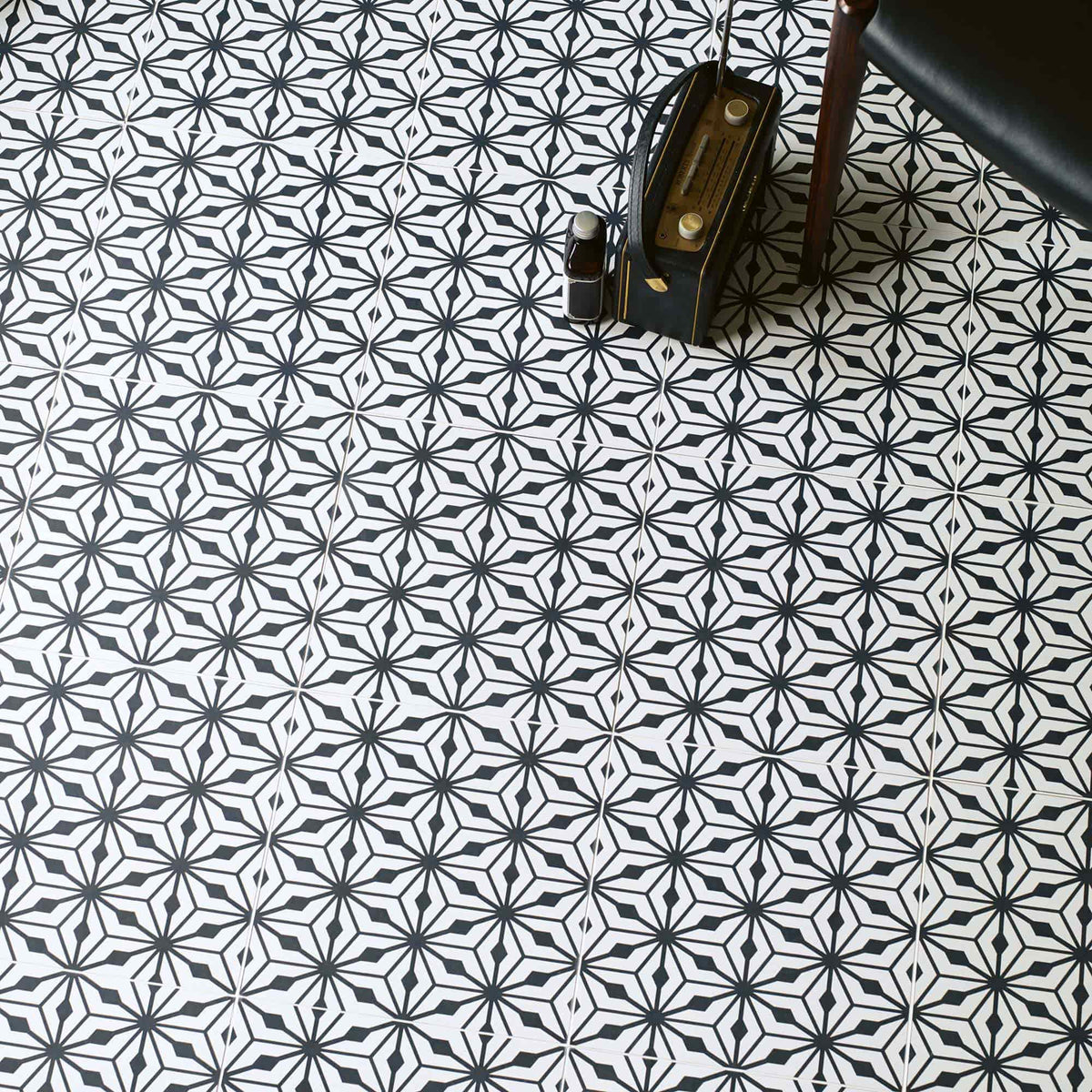
Not all tiles ask the same of you, or your fitter. Take our Sorrento Nizza porcelain: it's patterned, with very limited variation between tiles, so it lays with a small, consistent grout joint and rewards careful planning of the pattern repeat. Compare that with a Handmade Classic terracotta tile, which has significant natural variation in size and colour by design.
You lay it with a wider grout joint and you let the irregularity do the work, rather than fighting it.
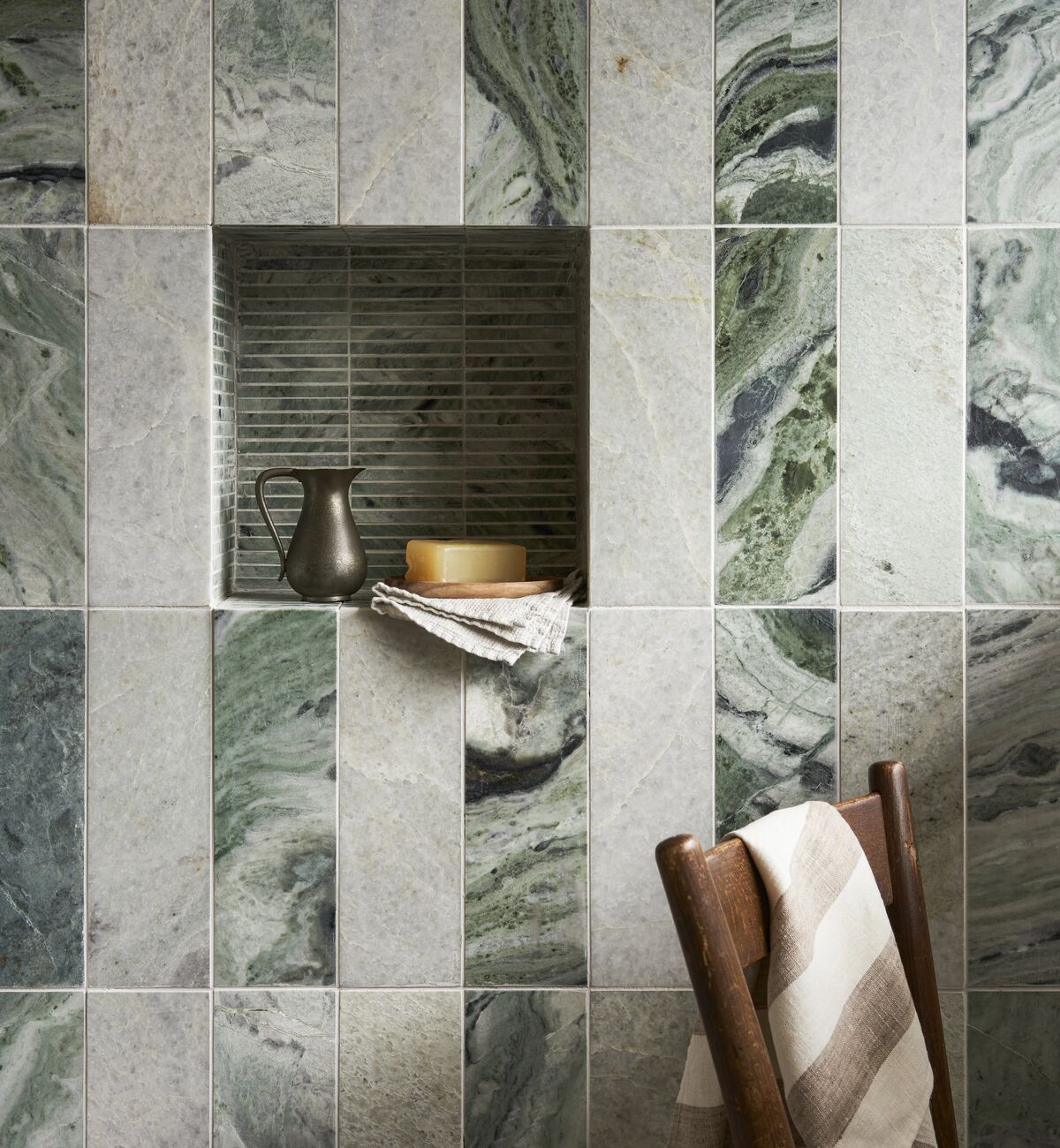
Natural stone, like our Seaspray green marble, sits at the more demanding end. It's a honed, bevelled tile with extreme natural variation between pieces, and, being porous, it needs sealing to protect it. Quarry tiles, such as Quarry Red, have a matt, natural finish and a hardwearing surface, so they're laid with attention to how they'll be cleaned and maintained once fitted. And a large format porcelain like Moderna White needs a properly flat subfloor because, at that size, any dip becomes obvious.
So the real comparison isn't which tile looks best. It's which tile suits the floor you actually have, and the amount of preparation you're willing to put in.
”Which tiles are best for which rooms and finishes?
Some tiles are simply better suited to certain spaces than others.
For busy family kitchens and hallways, a hardwearing porcelain like Moderna White or a patterned porcelain like Sorrento Nizza copes well with foot traffic and is easy to keep clean. For a bathroom or wet room, look at tiles with a suitable slip rating and consider a glazed ceramic for walls where moisture resistance matters more than heavy wear.
Terracotta and quarry tiles bring warmth and texture, and they're well suited to boot rooms, utility spaces and kitchens where you want a floor with real character rather than a uniform finish.
Marble and other natural stone work beautifully in a bathroom or a considered hallway, though they need more maintenance than porcelain, so they're best chosen with eyes open rather than on impulse. If underfloor heating is part of your plan, our guide to tiling over underfloor heating is worth reading before you finalise anything.
What are the alternatives if your first choice isn't quite right?
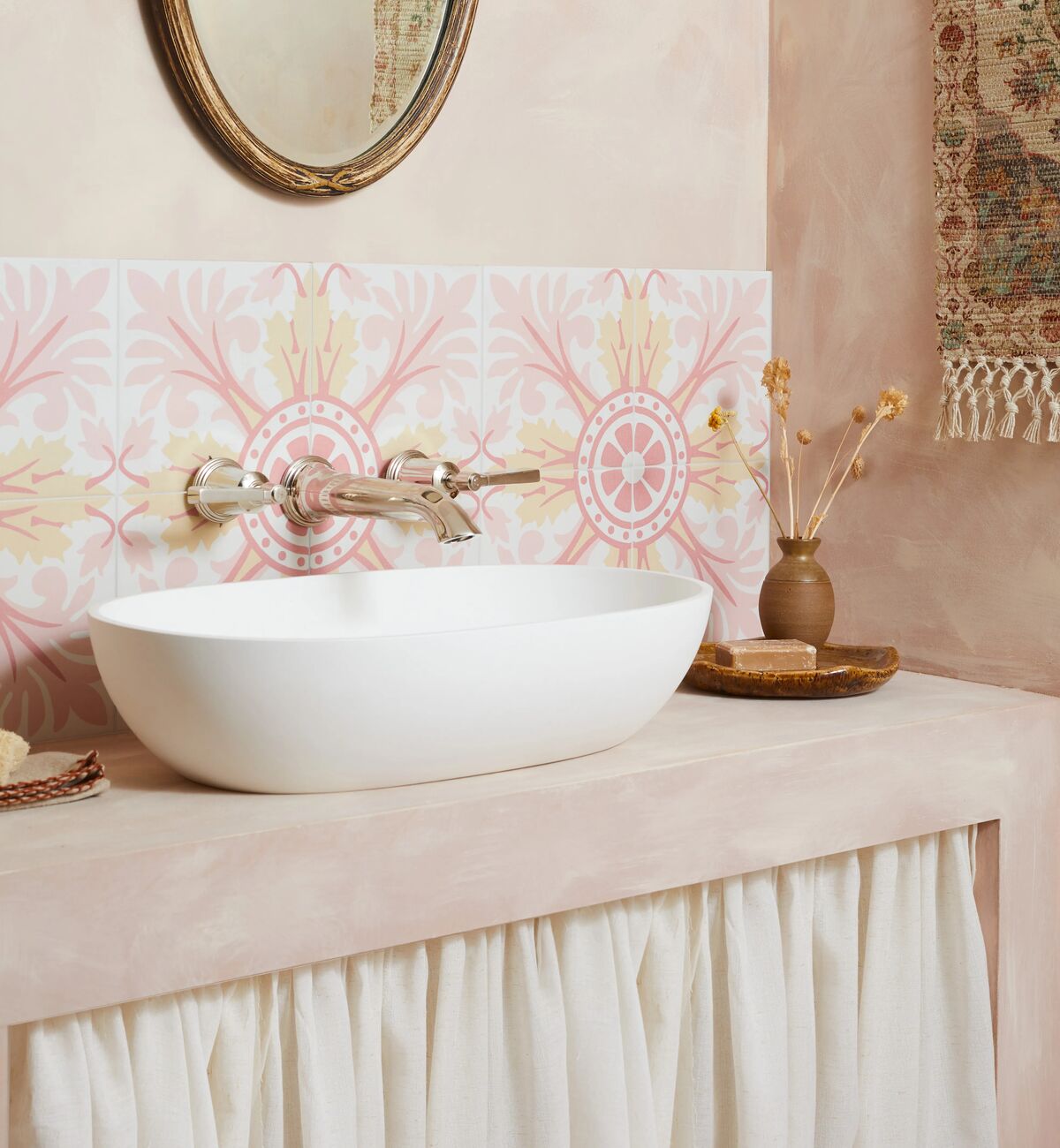
If a tile you like turns out to be tricky for your particular floor, you don't have to abandon the look altogether. A patterned porcelain like Bert & May Turenne reimagines a traditional encaustic design, but with far simpler laying and none of the sealing that a genuine encaustic tile demands. If natural marble feels like too much upkeep, a marble effect porcelain gives you the same tone and veining with the practicality of porcelain underfoot.
Equally, if a large format tile feels risky for an older, uneven subfloor, a smaller format in the same colourway often achieves a similar effect with far less preparation. It's always worth asking what you actually want from the tile: the exact material, or the look and feel it gives the room. Once you know that, an alternative is usually easy to find.
How can you tell a good tile choice from a poor one?
A few signs, spotted early, tell you whether you're heading towards a floor you'll be happy with or one that causes problems later.
| Green flags (good signs) | Red flags (common mistakes) |
|---|---|
| You've checked the tile's suitability for the room and the floor | You've chosen a tile on looks alone without checking suitability |
| You know the subfloor is flat, sound and properly prepared | You're assuming your existing floor is flat without checking |
| You've allowed for the right adhesive and grout for the tile type | You're using whatever adhesive happens to be left over from another job |
| You've ordered a few extra tiles to allow for cuts and breakages | You've ordered the exact number with nothing spare |
| You've thought about pattern, joint width and layout before starting | You're planning to work it out as you go |
| You've checked underfloor heating compatibility if relevant | You've assumed any tile will cope with underfloor heating |
If you can tick most of the green flags, you're in a strong position. If you recognise a few red flags, it's worth pausing and doing a bit more planning before a single tile goes down. Our guide to preparing a floor for tiling and our range of grouts, adhesives and sealants are both good places to start.


Getting it right, from the first click to the finished floor
A tile is only as good as the floor it becomes part of. Choose thoughtfully, prepare properly and the laying looks after itself, giving you a result that feels right underfoot and looks right for years. If you'd like guidance on a particular tile, a tricky subfloor or anything in between, our team is happy to help. You can get in touch here and we'll help you get it right the first time.