


What Are the Best Outdoor Tiles for 2026?
Outdoor tiles are having a moment. Not just for practicality, but as a considered extension of what's already happening inside the home. The best outdoor tiles are those that hold their beauty through every season: combining material integrity with slip resistance, frost tolerance and a finish that improves with age. Whether you're laying a terrace, defining a pathway or bringing warmth to a garden room, the right tile makes the difference between a space that simply functions and one that genuinely feels like your own.
Explore the Fired Earth outdoor floor tile collection to find options suited to your space, your style and your climate.
Estimated reading time: 6 minutes
What Materials Make the Best Outdoor Tiles?
Porcelain
Porcelain is consistently the most dependable choice for outdoor use. Dense and low-porosity, it's highly resistant to frost, moisture and heavy foot traffic. It holds its surface over years of exposure without demanding much in return, and because it absorbs so little water, it's well suited to freeze-thaw conditions. Always check the product to confirm it's suitable for outdoor use before buying.
Stone-Effect Porcelain
Stone-effect porcelain has become a firm favourite for exactly this reason. It offers the warm, textured character of natural limestone or slate, with the ease of maintenance that genuine stone can't always guarantee.
Slate & Limestone
For those drawn to natural materials, slate is a strong outdoor performer. Its naturally textured, cleft surface provides good grip underfoot and its low porosity makes it well suited to wet conditions. Limestone can also work beautifully outdoors, but it is more porous than porcelain or slate and needs sealing to protect against moisture and frost damage. Brushed or textured finishes offer the most reliable grip underfoot. Polished surfaces should be avoided outdoors as they become slippery when wet.
Quarry Tiles
Then there's quarry tiles. High-fired and hardwearing, they're worth revisiting for their honest, earthy quality. Originally valued for exactly the kind of durability that outdoor spaces demand, they bring a grounded permanence to garden floors and stand up well to British weather. Fired Earth's quarry tiles require sealing, so follow the product guidance carefully. As with any tile intended for outdoor use, always check that the specific product you choose is rated for external use before buying.
What Finish Works Best for Outdoor Tiles?
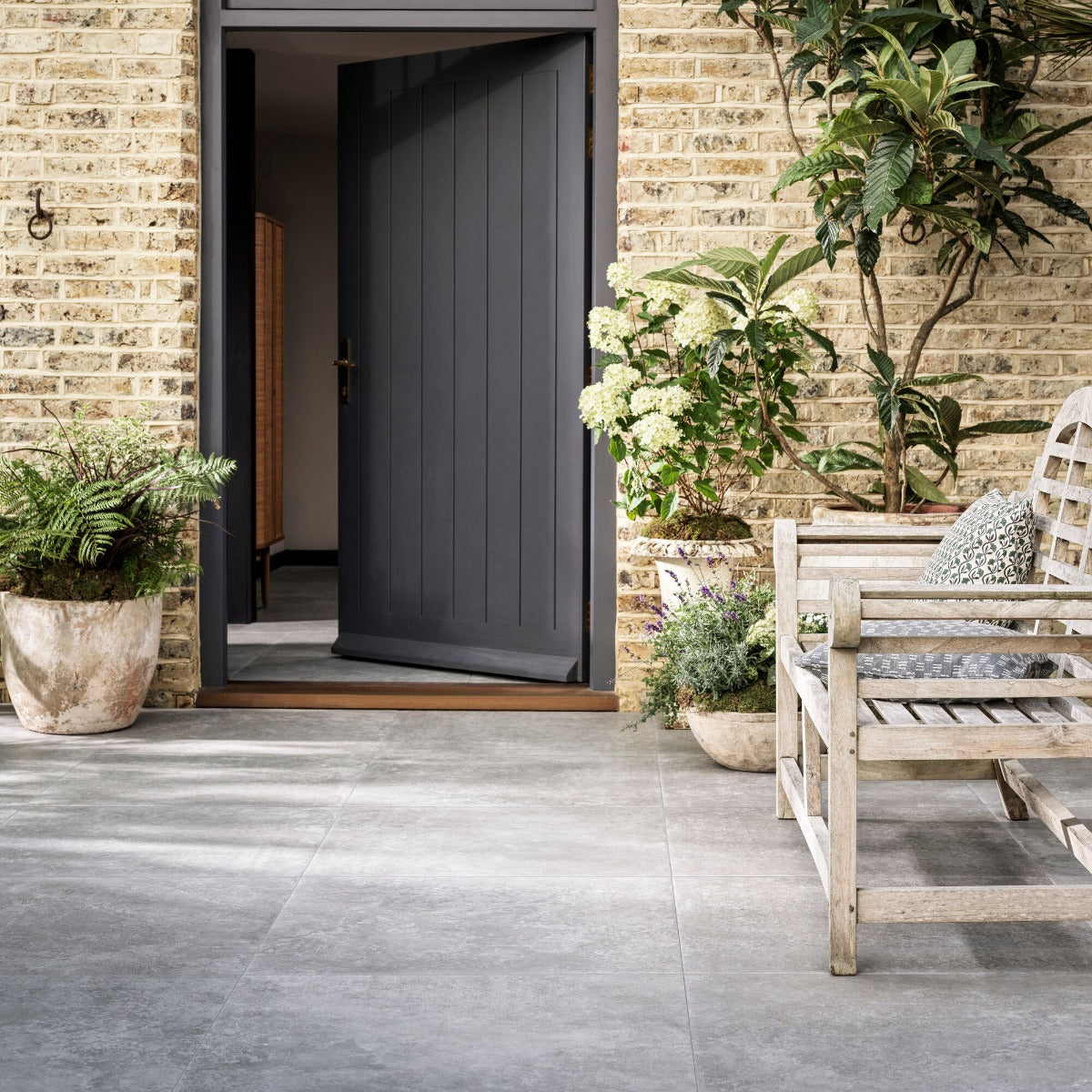
A matt or textured finish is the most practical choice for outdoor floors.
A brushed porcelain, a naturally textured quarry tile or a cleft slate each offers the grip needed underfoot, without sacrificing the considered look you're working towards.
The finish also affects how a tile ages. Natural stone and unglazed tiles such as quarry and slate develop a quiet patina over time, taking on the character of a space that's genuinely lived in. Textured porcelain holds its appearance more consistently, concealing minor marks and weathering slowly rather than showing every scratch as a glossy tile would.
If you're working with a decorative tile outdoors, look for options that have been specifically made for external use, with frost-proof credentials and a surface rating appropriate for floors.
Smooth, polished surfaces become hazardous when wet. And outside, they rarely stay dry for long.
”How Do Outdoor Tiles Differ From Indoor Tiles?
Porosity & Frost Resistance
An outdoor tile needs to be frost-resistant, capable of expanding and contracting through temperature changes without cracking or lifting. It must hold its colour and texture through seasons of rain, sun and frost, and resist the build-up of algae and moss that can make surfaces slippery over time. A tile with high water absorption will take in moisture, which then freezes and expands in winter, causing surface damage over time. Low-porosity porcelain or properly sealed natural stone handles this well. But not every tile rated for indoor use meets these requirements, which is why checking outdoor suitability before you buy really does matter.
Size & Installation
Tile size and installation technique matter outdoors too. Larger format tiles can look striking on a terrace, but they need a stable, level base and adequate expansion joints to accommodate movement. Smaller format tiles are more tolerant of minor substrate variation than large format tiles, and smaller traditional formats such as quarry tiles have a long track record in external settings.
Porosity Is the Key Distinction
Porosity is the key distinction.
Which Outdoor Tile Styles Feel Most Considered in 2026?

Stone-Effect Porcelain
At Fired Earth, we're drawn to surfaces with warmth and visible material character for outdoor spaces. Stone-effect porcelain in soft limestone tones works particularly well where a terrace meets a kitchen or living space and the two need to read as one. Creamy whites, sandy greys and pale ochre are all worth exploring.
Terracotta & Quarry Tiles
Warm earthy tones work beautifully outdoors too. Terracotta-effect porcelain tiles rated for external use bring those rich reds and burnt oranges to a terrace without the frost risk of genuine terracotta. Quarry tiles offer the same grounded warmth, and their earthy tones sit naturally alongside planting and timber.

Pattern outdoors is worth considering too. Not as a feature wall, but underfoot. Porcelain tiles with an encaustic-inspired pattern, made specifically for external use, can bring real character to a patio or pathway. If you're drawn to encaustic cement tiles rather than their porcelain counterparts, keep them for covered, protected spots: cement encaustic tiles are porous by nature and not suited to exposed positions where frost is likely.
Stone-effect porcelain is the most versatile choice across exposed and sheltered settings alike
Quarry tiles and terracotta-effect porcelain suit patios and garden floors where warmth, durability and grip matter
Encaustic cement tiles are best reserved for covered or protected spots; encaustic-style porcelain can be used more widely where rated for external use
What Should You Think About Before Choosing Outdoor Tiles?
Think practically about the space first. How much sun does it get? Is it exposed to frost? Does it need to drain surface water quickly? How much foot traffic will it take? These questions narrow the field considerably and help you make a choice that genuinely works.
Slip resistance is worth understanding before you commit. Outdoors, it's what makes a tile genuinely fit for the job, staying safe underfoot through rain, frost and everyday family life, not just beautiful to look at.
Choosing a tile suited to outdoor use means a patio or garden path stays practical as well as elegant, season after season.
”Finally, think about grout joints. Outdoors, wider joints are needed to accommodate the expansion and contraction tiles go through as temperatures change. Grout colour can significantly influence the overall tone of the floor. A warm, mid-tone grout tends to complement natural and stone-effect tiles, softening the overall impression and making the floor feel unified.
Frequently Asked Questions
What is the best material for outdoor tiles?
Porcelain is the most dependable choice for outdoor use — it's dense, low-porosity and highly resistant to frost, moisture and heavy foot traffic. Stone-effect porcelain, slate and sealed limestone are also strong outdoor performers.
Is porcelain or natural stone better for a patio?
Porcelain requires the least maintenance and offers the most consistent frost resistance, while natural materials like slate and limestone bring more textural character, though limestone needs sealing to protect against moisture and frost damage.
What finish should outdoor tiles have?
A matt or textured finish is best. Polished surfaces become slippery when wet and outdoor tiles rarely stay dry for long, so brushed porcelain, textured quarry tiles or cleft slate offer the grip needed underfoot.
How are outdoor tiles different from indoor tiles?
Outdoor tiles need to be frost-resistant and able to expand and contract through temperature changes without cracking. Porosity is the key distinction — a tile with high water absorption takes in moisture that then freezes and expands in winter, damaging the surface.
Do outdoor tiles need wider grout joints?
Yes. Wider grout joints are needed outdoors to accommodate the expansion and contraction tiles go through as temperatures change. A warm, mid-tone grout also tends to complement natural and stone-effect tiles best.
Are encaustic tiles suitable for outdoor use?
Encaustic cement tiles are porous by nature and should be reserved for covered, protected spots. Encaustic-style porcelain tiles made specifically for external use can be used more widely.
Ready to find the outdoor tiles that are right for your home? Our Advice Hub brings together practical guidance on materials, installation and care, helping you move from inspiration to a confident, considered decision. With more than forty years of sourcing and curation behind every collection, we're here to help you get it right.